
Current and new GLC set to sell side-by-side?
/Mercedes’ regional announcement of a PHEV edition of the current car curiously precedes imminent unveiling of all-electric successor.
POSSIBILITY Mercedes here will continue with the current generation of its GLC crossover even after a radical fossil fuel-eschewing replacement arrives seems to gathering pace.
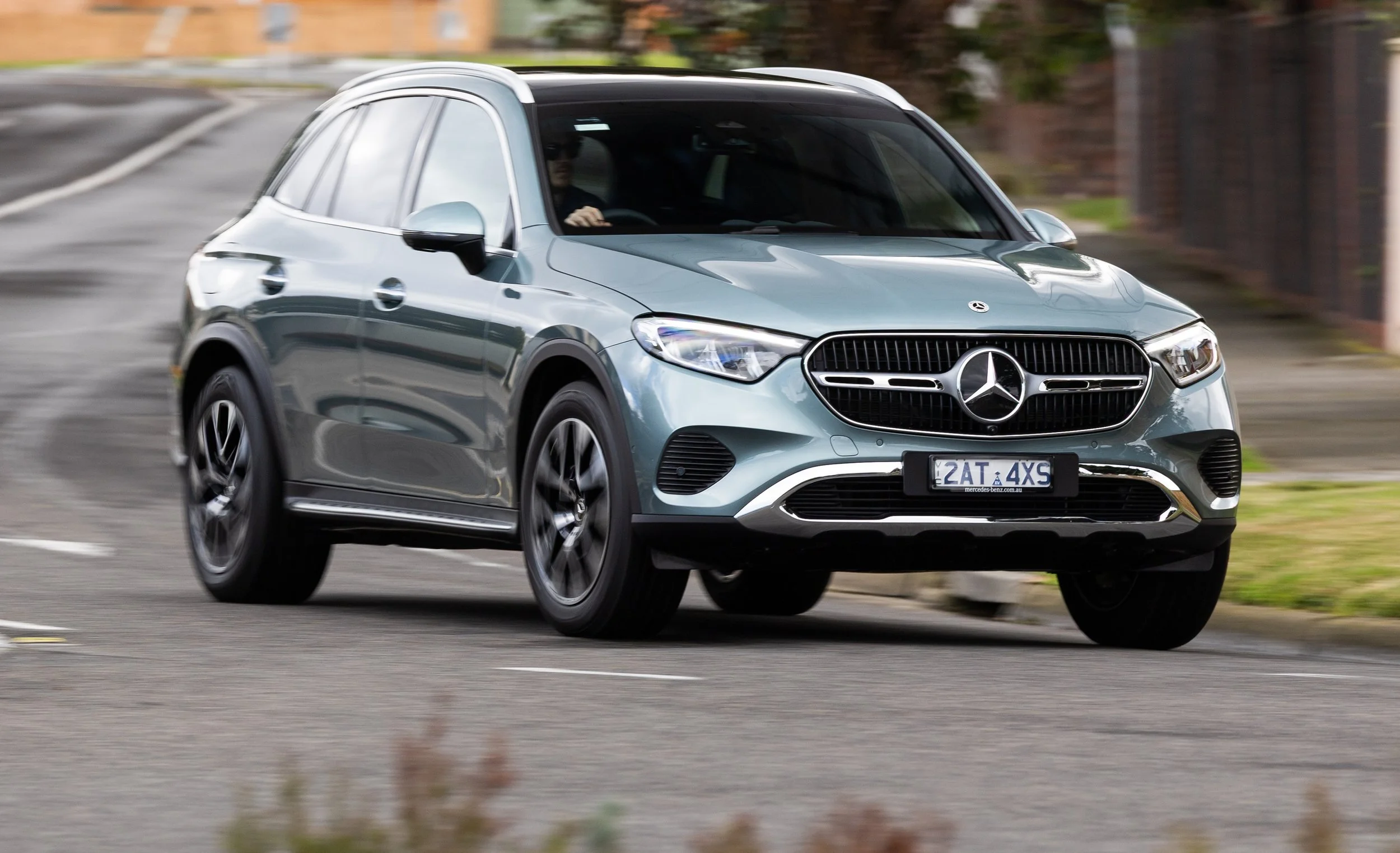
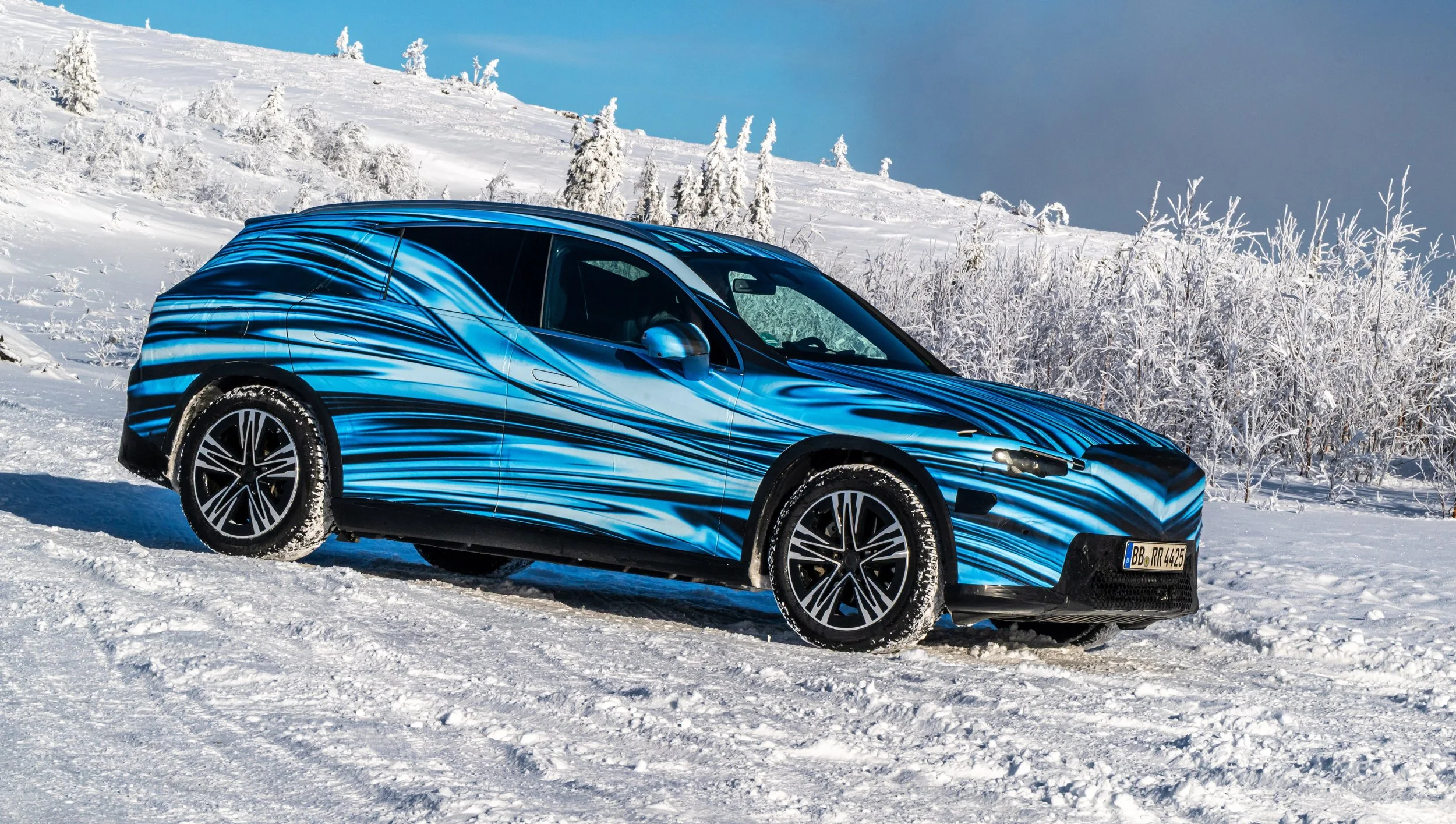
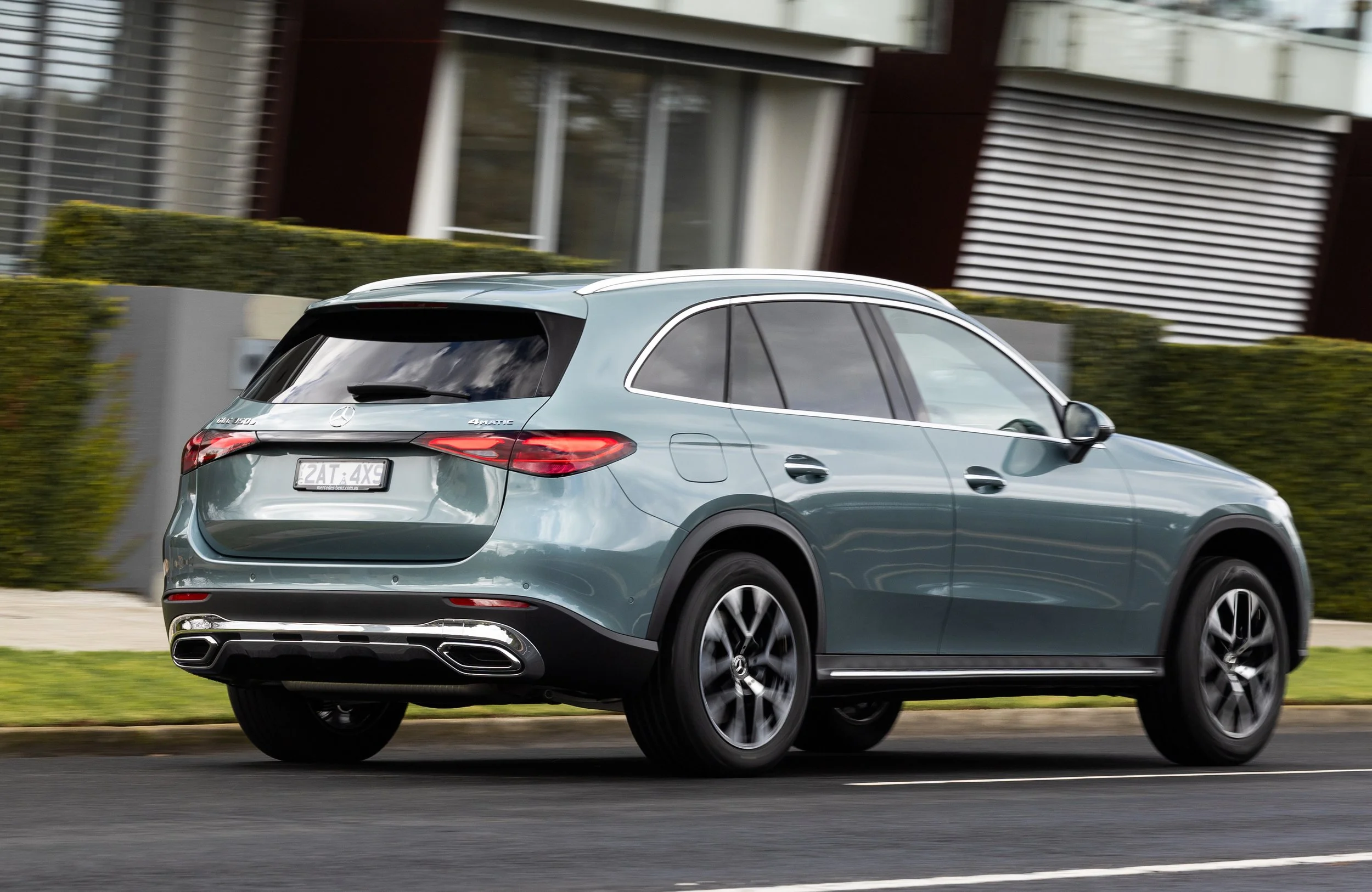
Announcement of impending arrival of the GLC 350 e (top image), a plug-in hybrid edition of the present model is curious timing, given next week Benz will unveil a new-generation all-electric GLC (immediately above) that ultimately stands to render all current choices impotent and will be here in the second half of 2026, the brand confirmed today.
Set to be the headline product in the Mercedes arena at the IAA motor show in Munich opening on September 9, what’s been labelled as the ‘GLC with EQ Technology’ is set to replace Benz’s first production electric, the EQC.
Yet it also marks an important next step in the brand’s electrification scheme.
The first passenger Mercedes model to introduce a bold new design language, it more importantly introduces a new dedicated electric car structure called MB-EA that will also underpin a upcoming electric C-Class.
Featuring an 800-volt electric architecture, it will have a maximum charging speed beyond the 320kW of the new, MMA-based CLA saloon. It can can add 260km of range in 10 minutes.
Nonetheless new GLC also arrives at time of struggle for incumbent Benz electrics.
In June the make became the latest of a long list of traditional car makers to reassess originally lofty EV goals, when sharing it would rethink it’s electric vehicle strategy, and retain combustion engines for longer.
It had previously expected to be all-electric “where market conditions allow” by 2030. But now it acknowledges that high-tech hybrid and fully combustion engines will remain in production for the foreseeable future.
In the past week, reports have come that it is considering early retirement for current EVs that have failed to spark up enough interest.
One is the EQE sedan on which high hopes for NZ acceptance was once voiced; some are suggesting another might yet be the G 580 with EQ Technology version - a quad motor version of the G-Class that is technically incredible but has failed to resonate.
The C63 AMG is also cited for complete re-engineering, to divest a four-cylinder with electric assist drivetrain that again, while hugely impressive in technical sense, has failed to win over its customer base.
Production of the EQE, a sister SUV and the platform and technology-sharing, EQS sedan and EQS for the US has just temporarily ceased, though the Alabama factory that makes them will continue to serve international markets, which include New Zealand.
NZ registrations counts are public knowledge, but those for individual Benz electrics have proven elusive.
But it seems highly likely the Auckland-based national distributor has been just as frustrated as almost all other players by the altered state of our market.
Having shown a positive track between 2020 and 2023, EV acceptance here has considerably dulled. The sector is in slow recovering after almost complete collapse last year, a scenario averted by massive discounting to clear stock.
The withdrawal of a rebate for sub-$80,000 cars, the impact of Road User Charges on all electrics and PHEVs and a general economic decline have all been factors in dulled EV acceptance.
On top of that, there is owner dismay about the poor residuals for the types. this has been particularly felt by buyers of premium cars. These generally depreciate quickly, but EVs have been hurt most - current expectation is that products bought new 12 months ago will by now have lost up to half their value.
Mercedes-Benz regionally has yet to unpack the significance of introducing the GLC 350e now. However, in response to questions about its thinking about product, it shared: “We are working on welcoming the new electric GLC in the second half of 2026 and we have no changes to announce regarding our petrol GLC line up.”
Meantime MBNZ is set to sell with 4Matic four-wheel drive and a nine-speed automatic gearbox for $115,900, with Sport, Night and Plus packages as options. These respectively sell for $6000, $1300 and $7600.
The type is believed to be a development of the GLC 300 e introduced internationally in 2023, two years after a major facelift of the whole range, which dates back to 2015.
The GLC 350 e runs a four-cylinder petrol motor with an electric motor - believed to contribute 95kW/440Nm - delivering a combined 230kW/550Nm and a solid dollop of fully electric range.
But how much? Mercedes-Benz Australia cites 132km, but says that is from the NEDC lab test, which is less stringent than the WLTP protocol preferred by NZ regulators since 2022 and set to be our sole accepted standard from end of 2025. Overseas data for the 300 e uses WLTP and cites a range of 123km. However, Mercedes here says the car it has will deliver 107kms when using that scale.
Because Benz headquarters regionally in Australia, where NEDC is still considered relevant, it provisioned only the more optimistic result in a media share but subsequently came up with a WLTP figure when asked.
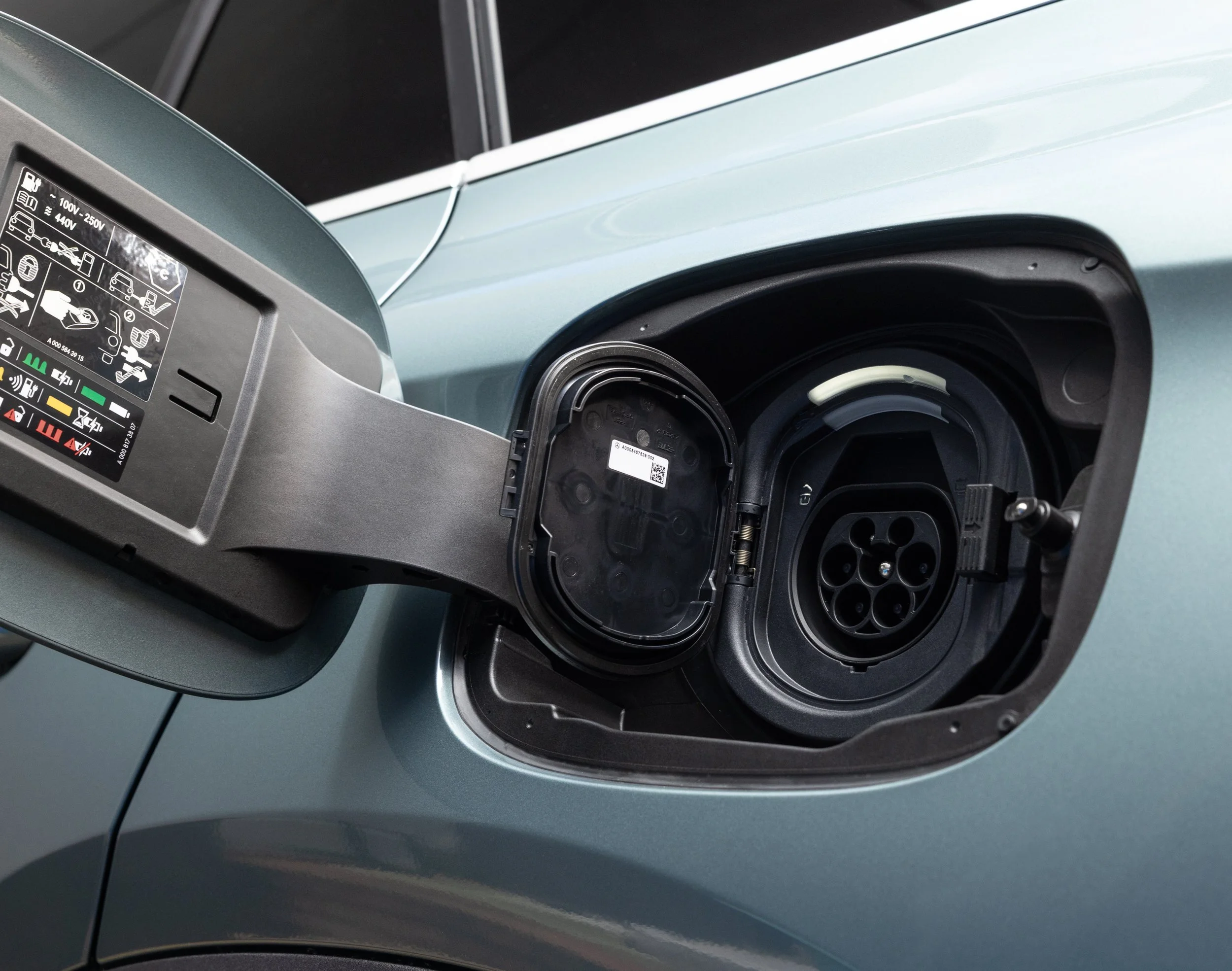
The electric replenishment of the battery - which is thought to have a capacity of 31.2kWh - is purely AC, which is an older technology now that many PHEVs are now compatible for CCS DC charging. That will almost certainly effect replenishment speed. The 300 e has a maximum recharging rate of 60kW.
Also, overseas reports suggest the battery packaging means the boot capacity will be 400 litres, a 200 litre reduction on other editions here. A 1497-litre capacity with the back seats folded is 143 litres behind the standard GLC, which has a 48 volt system.