
Tayron kicking off with ICE raid
/VW’s important replacement for the Tiguan Allspace is filtering in, with demo units touring the country.
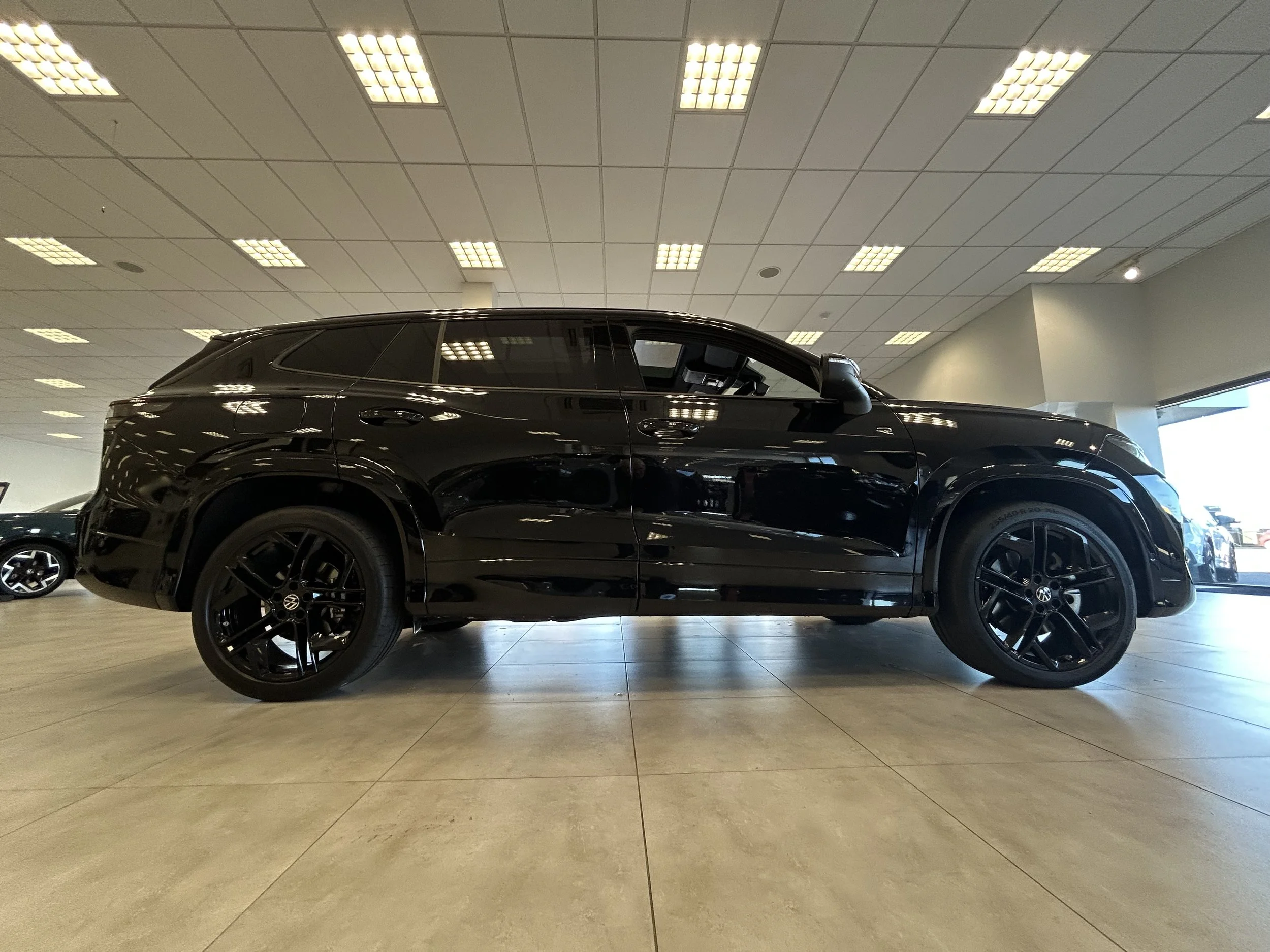
The new large family-themed sports utility Volkswagen that immediately replaces the Tiguan Allspace and after 2027 will be standing in for the top-sized Touareg has hit NZ soil.
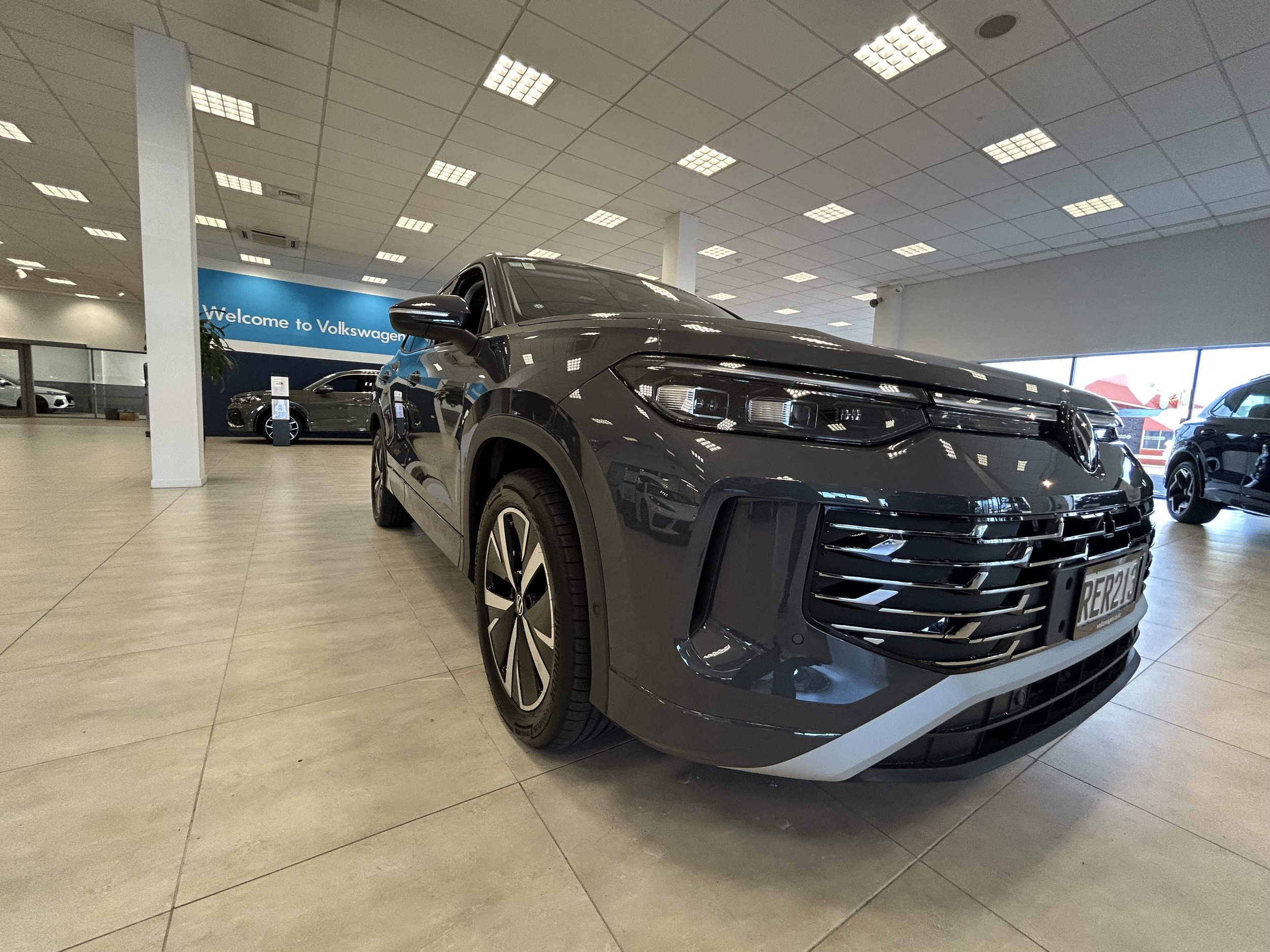
The Tayron (pronounced ‘tie-ron’) is again evolved from the latest Tiguan that has been here since last year - but with more power, technology, additional space and all-wheel-drive - and will stand more directly as an alternate to the Hyundai Santa Fe, Kia Sorrento and Toyota Highlander.
Indicative pricing information provisioned ahead of the model’s full release next month shows it to be in a higher bracket than the Allspace.
The least pricey of two Tayrons so far indicated for provision looks set to be around $6000 below the most expensive predecessor, which sat at $84,890.
It also seems likely to stand $30k above the cheapest Allspace, that was $59,990 on runout.
The schedule is being shared by VW NZ to potential buyers.
It cites the the entry Tayron Elegance with a 150kW/320Nm 1.4-litre petrol and 4Motion will kick in for $78,990.
The alternate Tayron R-Line, which takes a 2.0-litre petrol and also runs with a seven-speed direct shift transmission, seems set to start at $96,990, with options that can take it just over $100k.
The engine is the same as went into the previous R, but with elevated power and torque, so 195kW/400Nm now against 162/350Nm previously.
The previous entry Tiguan had a 1.4-litre turbo petrol making 110kW/250Nm, and VW also had a 2.0-litre that made 132kW/320Nm.
Whereas Allspace was very obviously a stretched Tiguan, Tayron stands out as a singular car.
This time around Volkswagen wanted to create a standalone model to fill the gap between the Tiguan and Touareg, which the make recently said will not be replaced when its production life ends at end of next year.
VW dealers have been told Touareg supply will continue into 2027. There is thought VW’s next big SUV could be developed from a new large Audi electric model, the Q9.
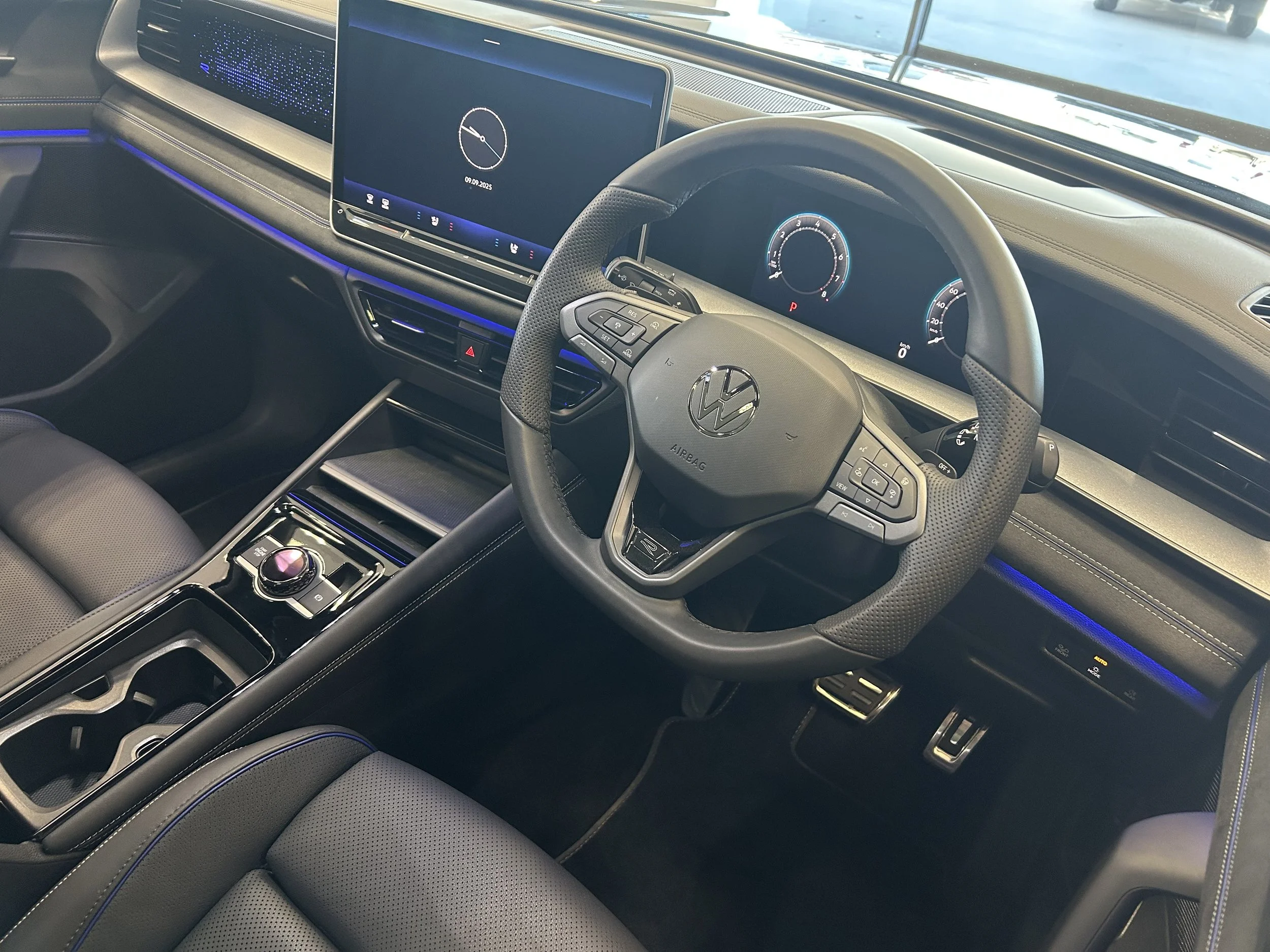
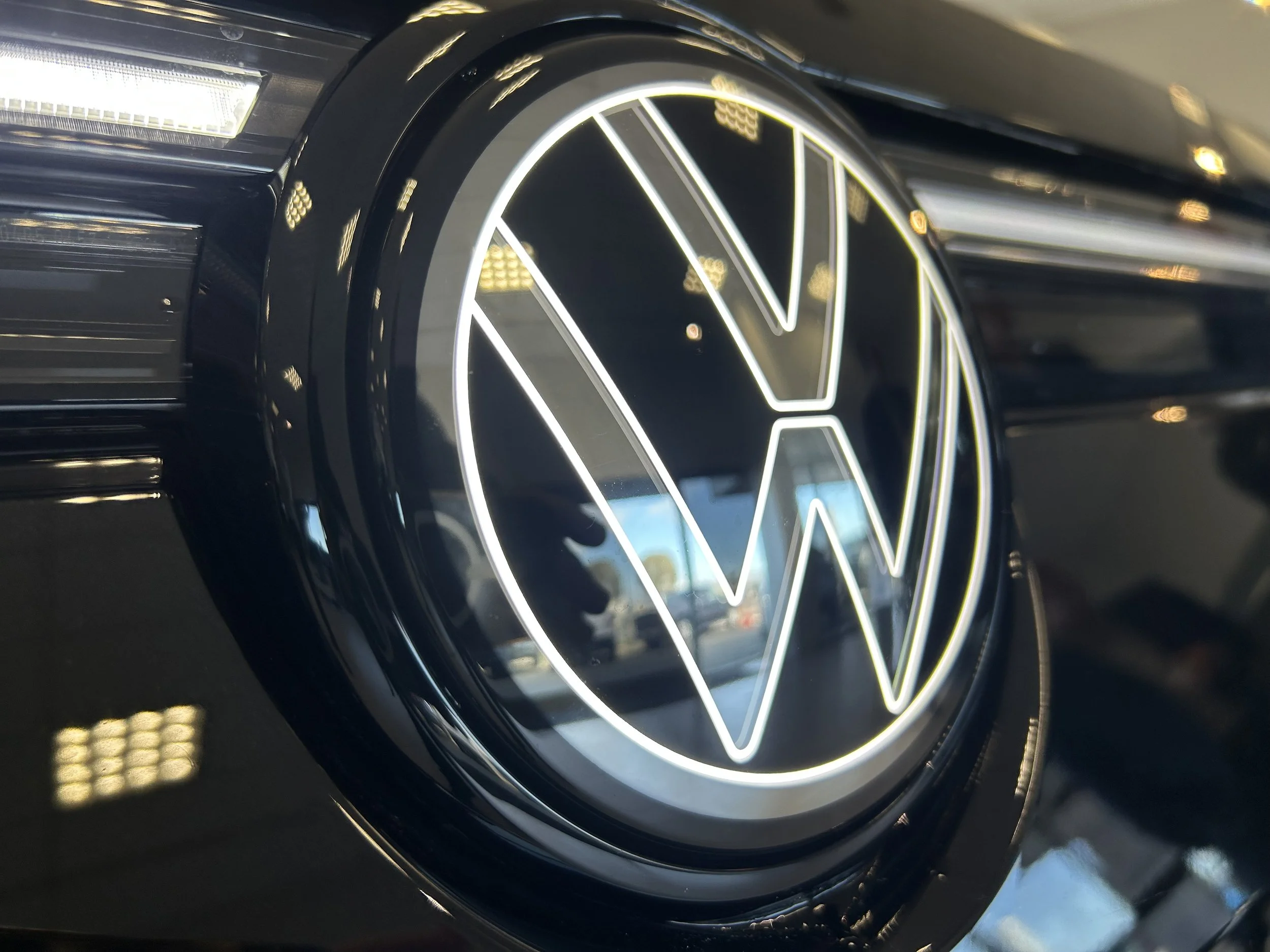
Tayron’s styling is markedly more modern than Allspace’s; it also avoids continuing the ‘stretched’ appearance that became a love/hate issue with the old choice e. Neat styling touches now include illuminated VW badges on the nose and tail.
Standard features in the base Tayron include a 12.9-inch touchscreen with navigation, 10.25-inch instrument display, LED headlights, 18-inch alloys, keyless entry and start, a power tailgate, 360-degree camera, a suite of advanced safety systems and leather upholstery. A $6000 touring pack is an option, according to the schedule.
The 2.0-litre has 20-inch wheels, matrix LED headlights, a 15-inch touchscreen, leather trim, heated and ventilated power-adjustable front seats with massage, area view camera, heads up display, higher grade of leather, Harman Kardon stereo nd a panoramic sunroof. A touring pack is also an option, again for $6000, and there’s also a Black Pack, for $2000.
At 4770mm long, 1852mm wide and 1660mm tall, on a 2791mm wheelbase, the Tayron is a touch longer and wider than the Tiguan Allspace, but shares its distance between the front and rear wheels.
It is about 230mm longer nose to tail, and 114mm between the wheel axles, than the five-seat Tiguan, and has 850 litres’ cargo capacity when all seats are in place.
It is still understood plug-in hybrid power is also set to become part of the Tayron family here in preference to a 112kW front-drive 1.5-litre 48-volt mild-hybrid also in the international family.
Tayron eHybrid is already in the United Kingdom with a turbocharged 1.5-litre petrol with a 85kW electric motor married to a 1.9.7kW lithium ion battery.
Maximum power and torque are cited at 150kW and 350Nm. The electric pure range is claimed to be 118 kilometres and, when the powertrains are operating optimally in unison, the fuel burn drops to just 0.4 litres per 100km.
With a fully charged battery and regardless the petrol tank only holds 45 litres, there’s a potential driving range of 850 kilometres without stopping.
Usefully, the PHEV system supports 50kW DC fast charging in addition to the 11kW AC rate.
Because of the space requirements for the battery, the PHEV is a five chair selection and front-drive, and has a slightly smaller boot than a standard petrol five-seater we’re unlikely to see.
VW says there is not sufficient room to install a third row of seats in a way that would still enable them to fold down into the floor when not in use. Passenger headroom in the rearmost row would also be further restricted.