Kia Seltos hybrid first drive: Brightest spark energised
/The smallest sports utility in this brand’s extensive family is a big mover. Nothing should change.
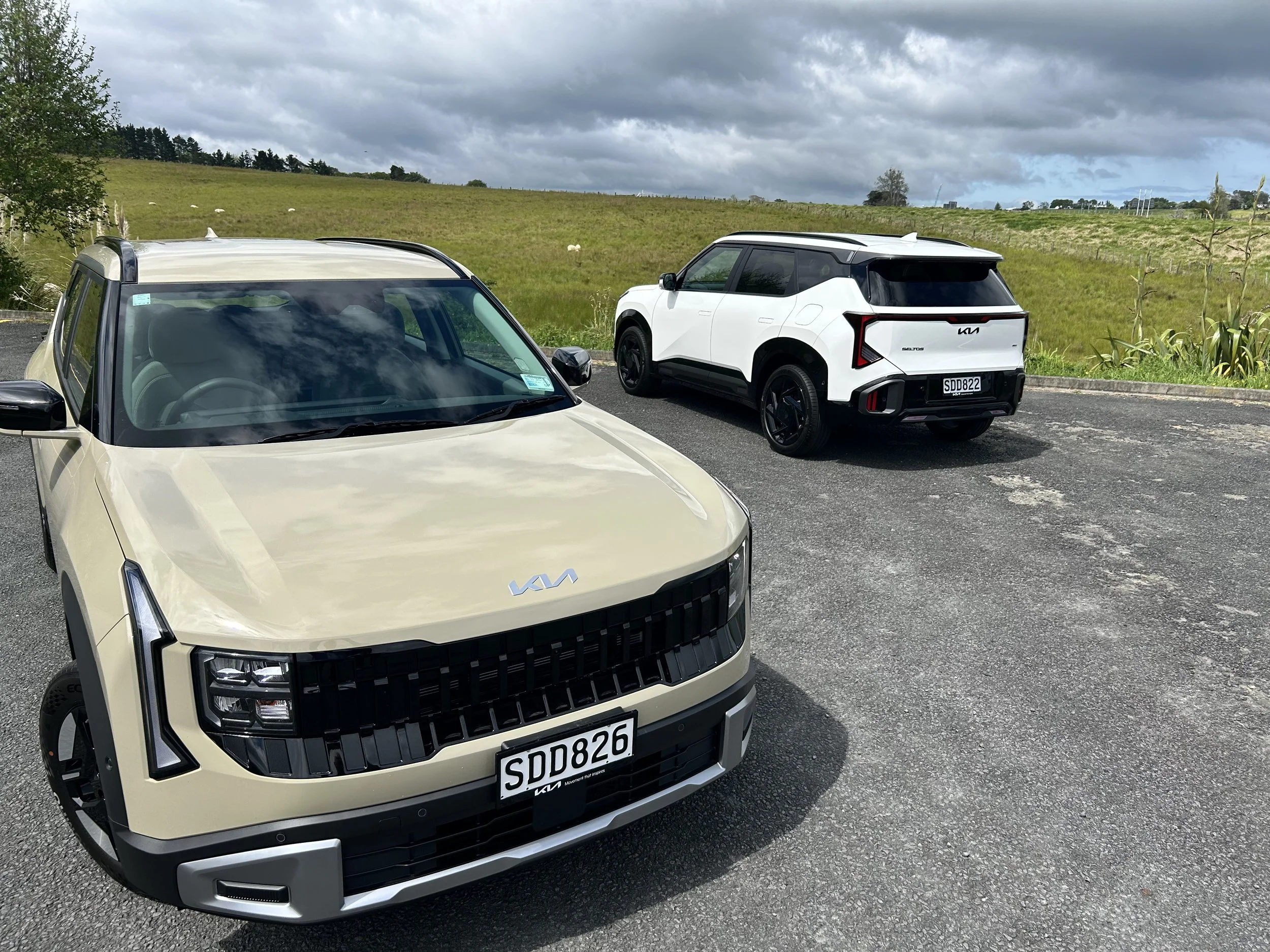
HAVING the largest all-electric model range here is important to Kia New Zealand, but it also feel increasing the number of hybrid vehicles is also crucial.
The latter pitch centres currently on the car that has been its consistent top seller for seven years.
The smallest of its sports utilities, the Seltos, has giant reputation. Since arrival in 2019 it has gone gang-busters. There are 16,527 in circulation.
Run-out scheduling meant the outgoing generation one didn’t lean as heavily into 2026 as it has in previous years, but a year-to-date total Kia registrations count of 9750 units is very decent, and they they feel 10,000 units will surpass before year-end. Some of those yet to sell will include this new Seltos , which is also expect to run strong in 2027. Kia NZ is one of very few brands to offer volume targets, but is happy to share that it wants to put at least 2750 examples into circulation next year.
That count will make ensure big presence in the sector and is why Kia went big with the gen two car’s launch, with a "takeover" of Auckland's Eden Park, which they sponsor.
Dealers got a full-scale evening event with a laser light show; journalists came in next day to see 57 cars still out the hallowed turf.
Cause for excitement is that this new one is all new, not just in look but also technical delivery.
Kiwis are dead keen on plug-less hybrids, and the Seltos now delivering that direction in two states of tune is a revision that’s potentially more important than it having sharper styling and more sophistication, especially as it doesn’t blow out the pricing.
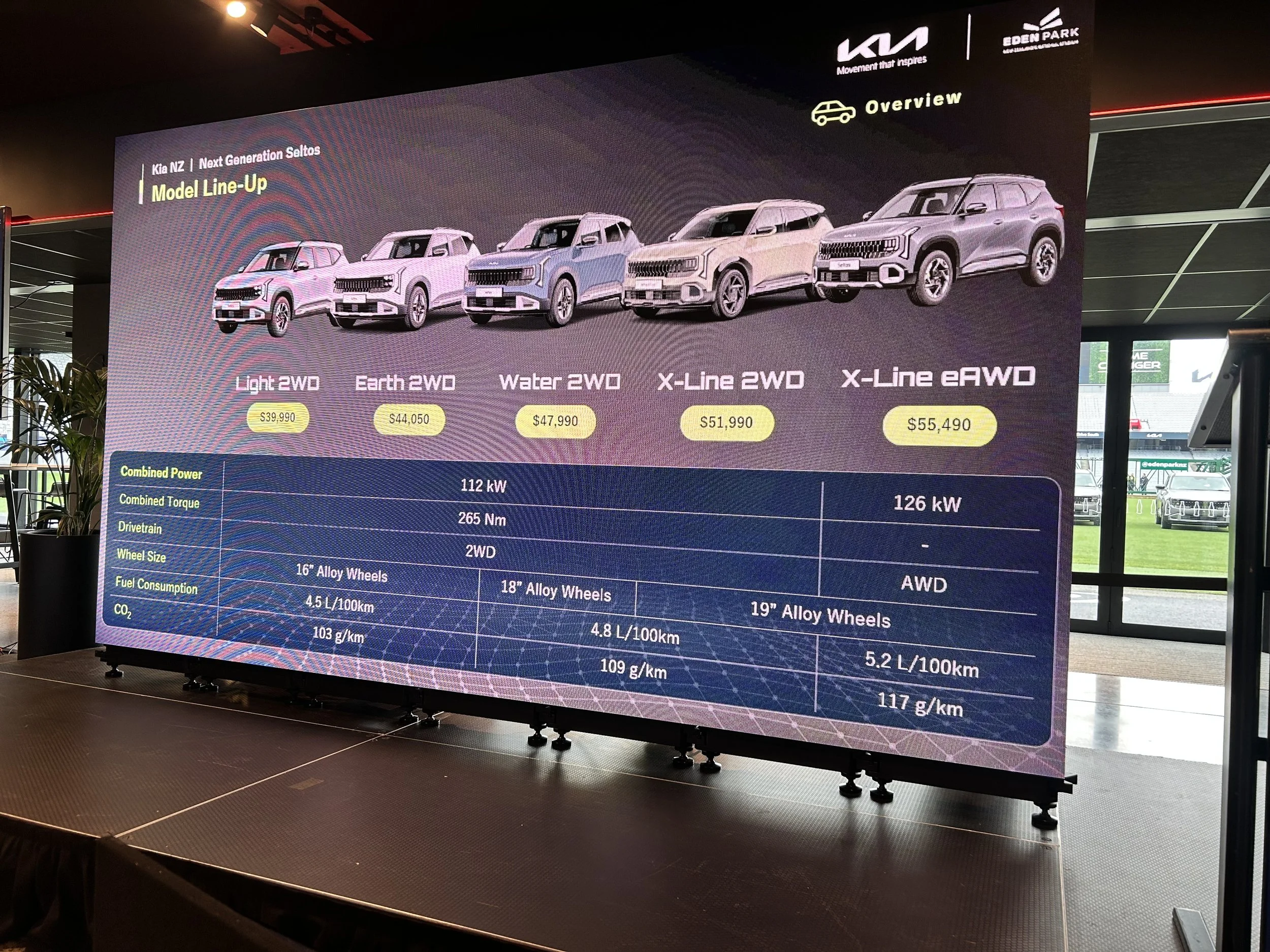
The smallest of Kia’s crossovers starts in a $39,990 Light, then ramps up to $44,050 Earth, $47,990 Water and $51,990 X-Line, all with a 1.6-litre naturally aspirated four-cylinder petrol with an electric motor and a 1.49kWh lithium-ion battery.
These offer 112kW and 265Nm and continuing type-familiar front-drive, via six-speed dual clutch. The power output is just 2kW up on that from the naturally aspirated Atkinson Cycle 2.0-litre it bumps, but economy-wise it’s in a whole new place, with figures of 4.6 litres per 100km suggesting it will be around 3L/100km more frugal.
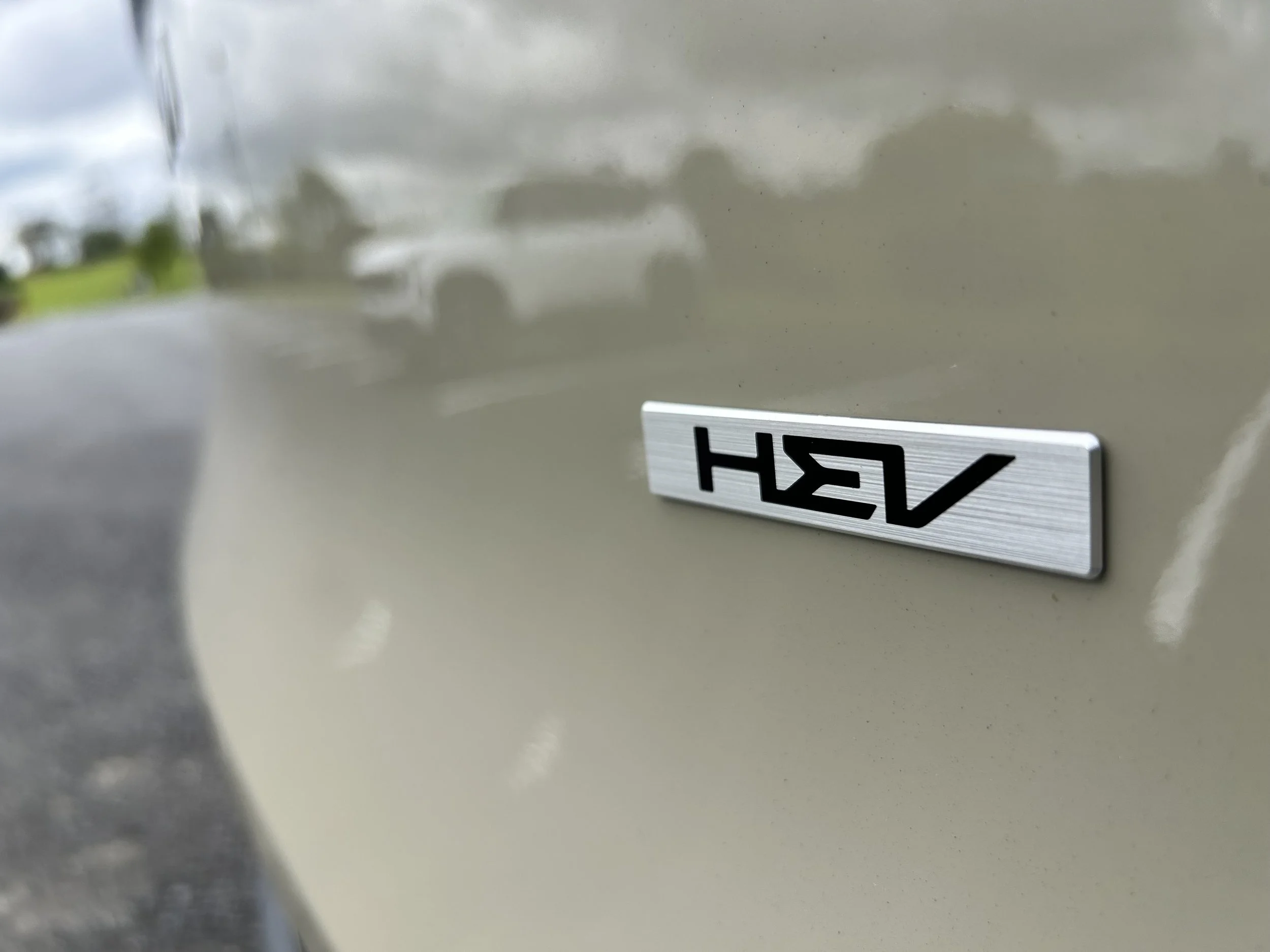
Above those is an all-wheel-drive option restricting to X-Line, for a $3500 premium, maintaining the 1.6, again in marriage with a six-speed direct shift transmission, also with HEV badging.
But stronger with 129kW, an enhancement resultant of the involvement of electrics motors, one specific to the rear axle, just as market leader Toyota does it.
Benefit over a mechanical set-up from what Kia calls an ‘e-AWD’ is superior fuel efficiency - employed optimally it’s just 0.2L/100km short of the front drive by Kia calculation- and better traction.
But it means a complexity when establishing maximum torque.
Basically, it’s anyone’s guess. There is no combined figure. The make has individual counts for the engine and each motor and all are outwardly beefy, but calculation isn’t just a matter of adding up.
Driving cemented impression whatever it makes it somewhat above the front-drive car’s maximum, because it has tangibly more oomph in step-off and at cruise. By the by, it also has a very different aural signature. The audible at distance Tardis (yes, showing my age) warble leaves it sounding more ‘electric’ than some of Kia’s actual battery-wed products.
If NZ was even to go back to cheap pump fuel (yeah, fat chance) there are other engines that could avail. Naturally aspirated 1.5-litre and 2.0-litre, and turbocharged 1.5-litre and 1.6-litre petrol engines, even a 1.5-litre turbo-diesel, all avail.
But noted seen how well petrol-electric pathfinder Toyota has done with hybrid, Kia’s course is logical and expect loud messaging.
The powertrains are smooth and not too noisy. You’re not going to buy a Seltos to set speed records and while there is a Sport mode to liven it up from the alternate Eco and the default Normal, I suspect most drivers won’t think of playing with that and those who do might deviate toward the frugality setting.
Kia predictably says the new platform delivers improved ride, handling, and stability, along with greater body rigidity and improved noise insulation.
Suspension being by the ubiquitous Macpherson strut up front, with a sophisticated multi-link design at the back, is par for the course, but the make also says the suspension has been tuned for ‘local’ conditions. In translation that means the cars here achieve a rework undertaken in, and primarily for, Australia, where the make has a team of spring and damper specialists.
The Light and Earth run on 16 inch wheels, the Water is on 18s and the X-line takes 19 inch, with lowest-profile 235/45 R19s that bring a higher degree of road roar, but don’t seem to degrade the ride quality too much.
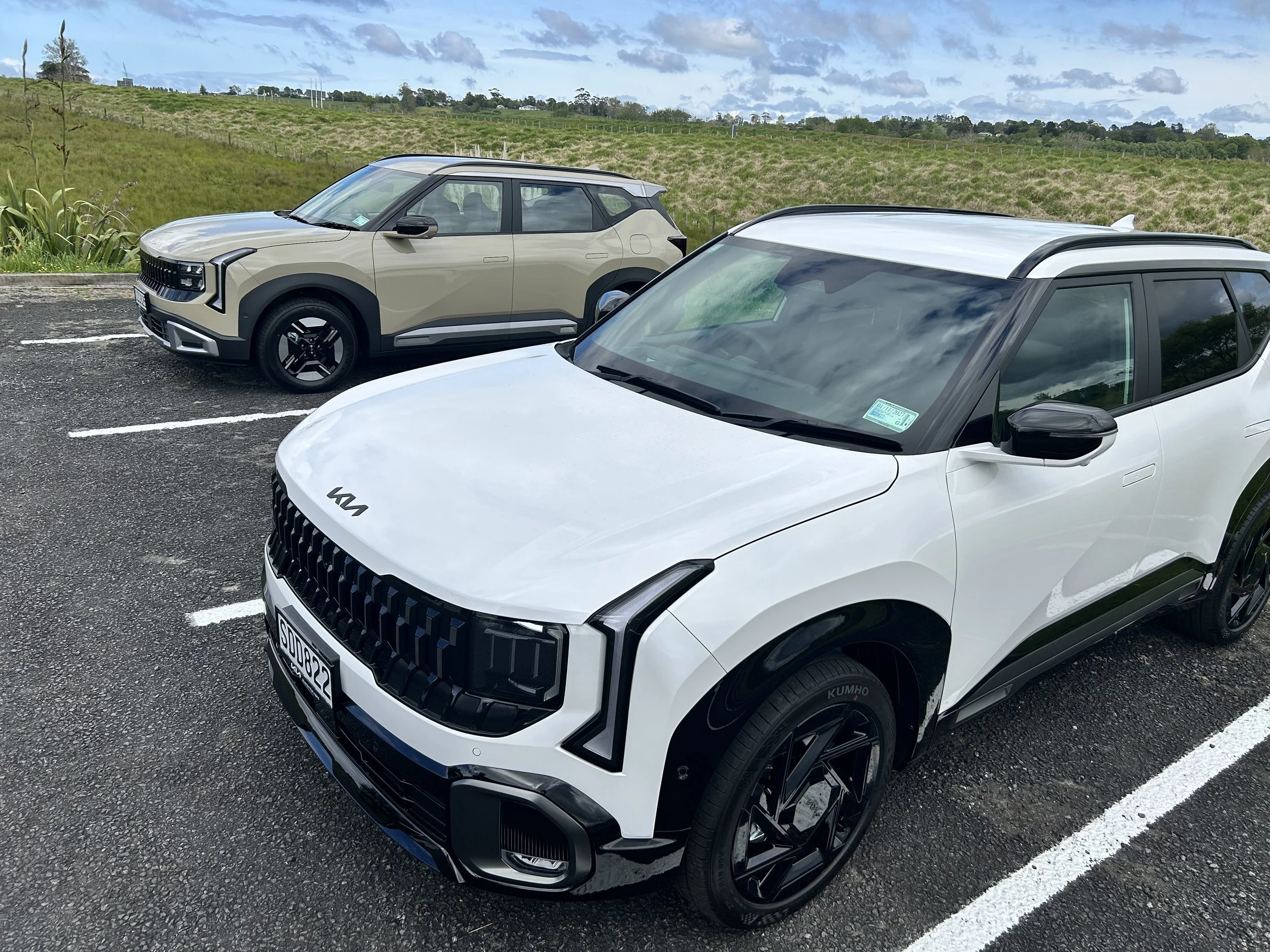
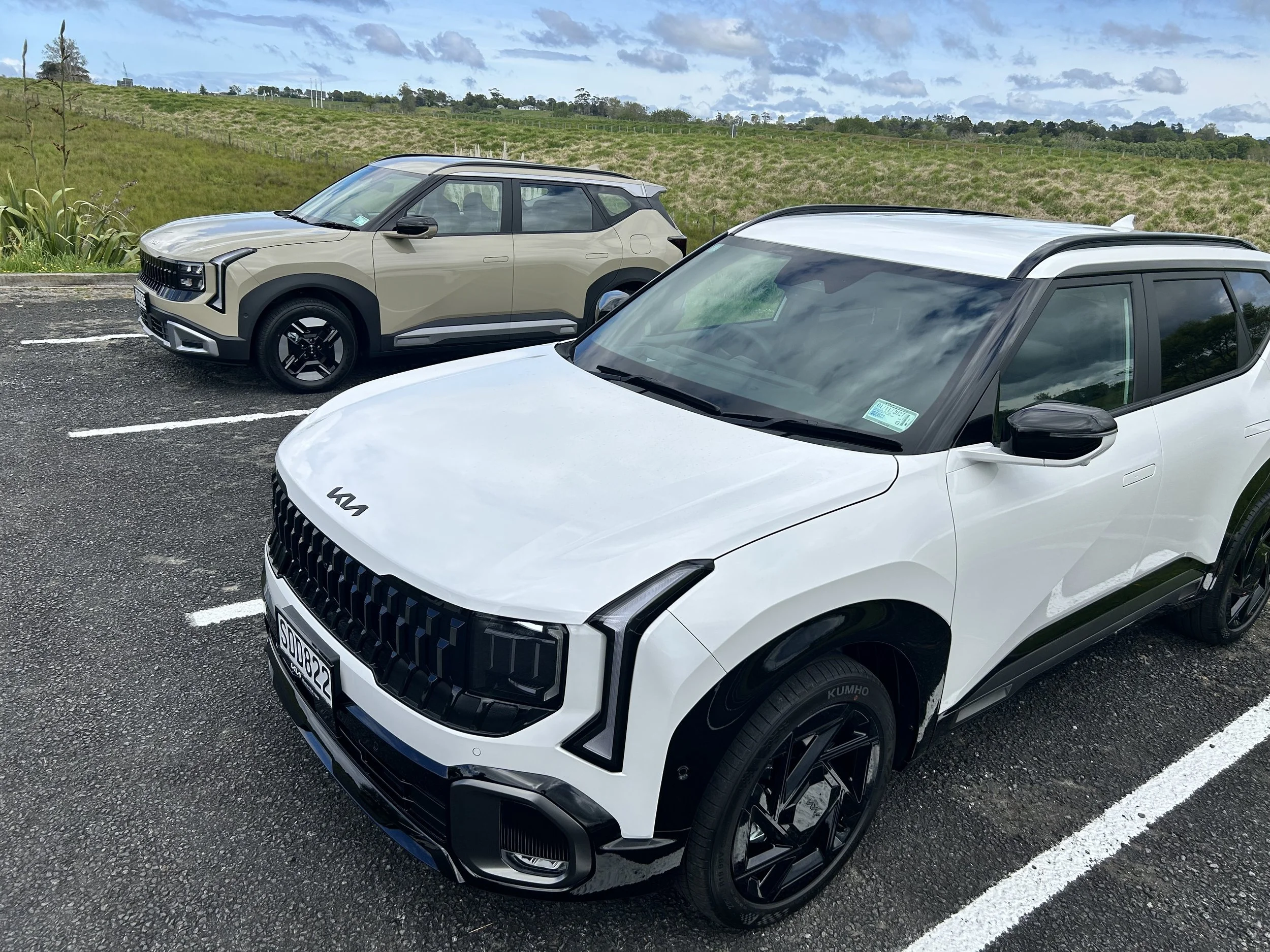
Like the look? This is Kia’s ‘opposites united’ styling language expressed especially strongly.
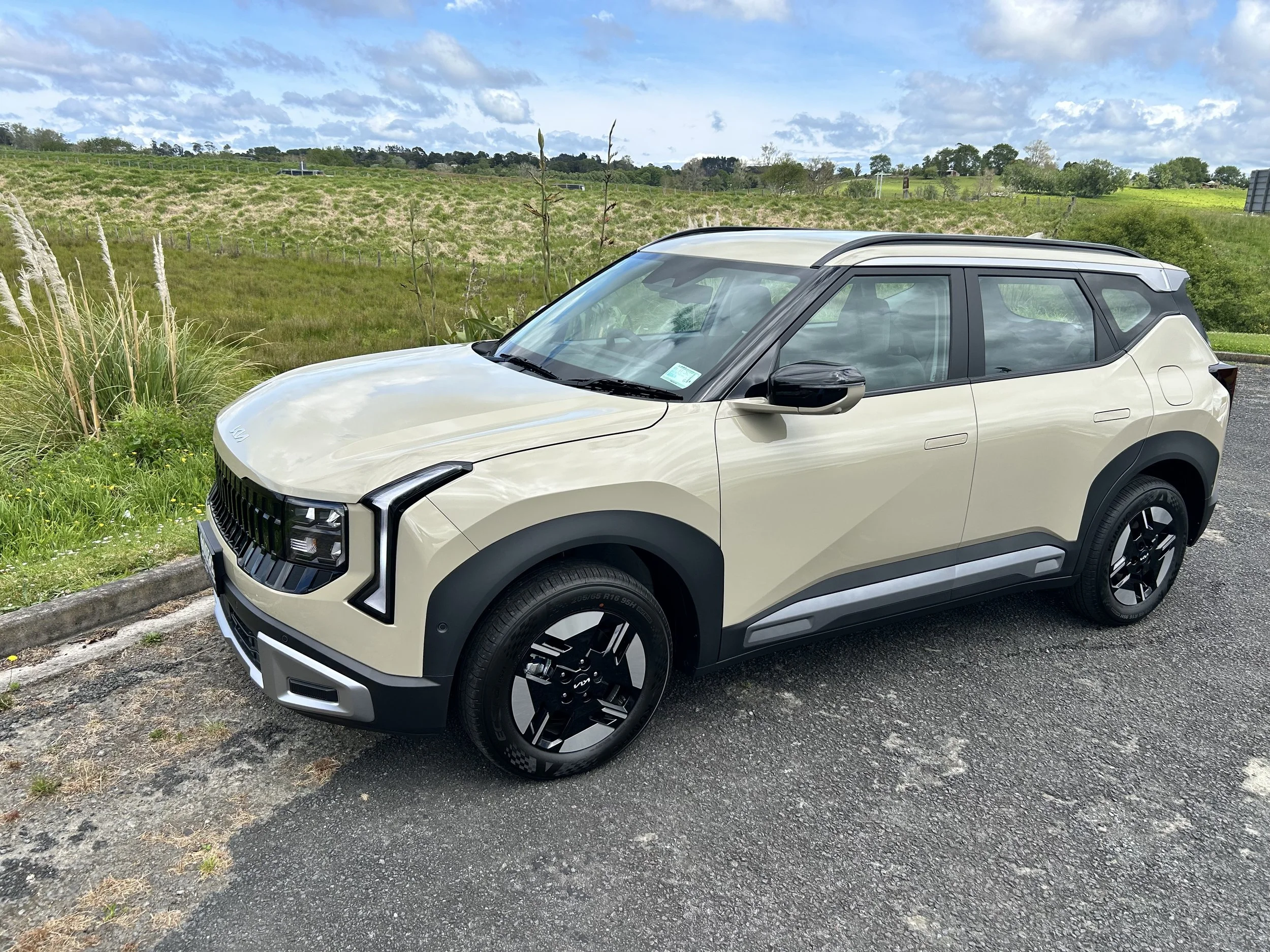
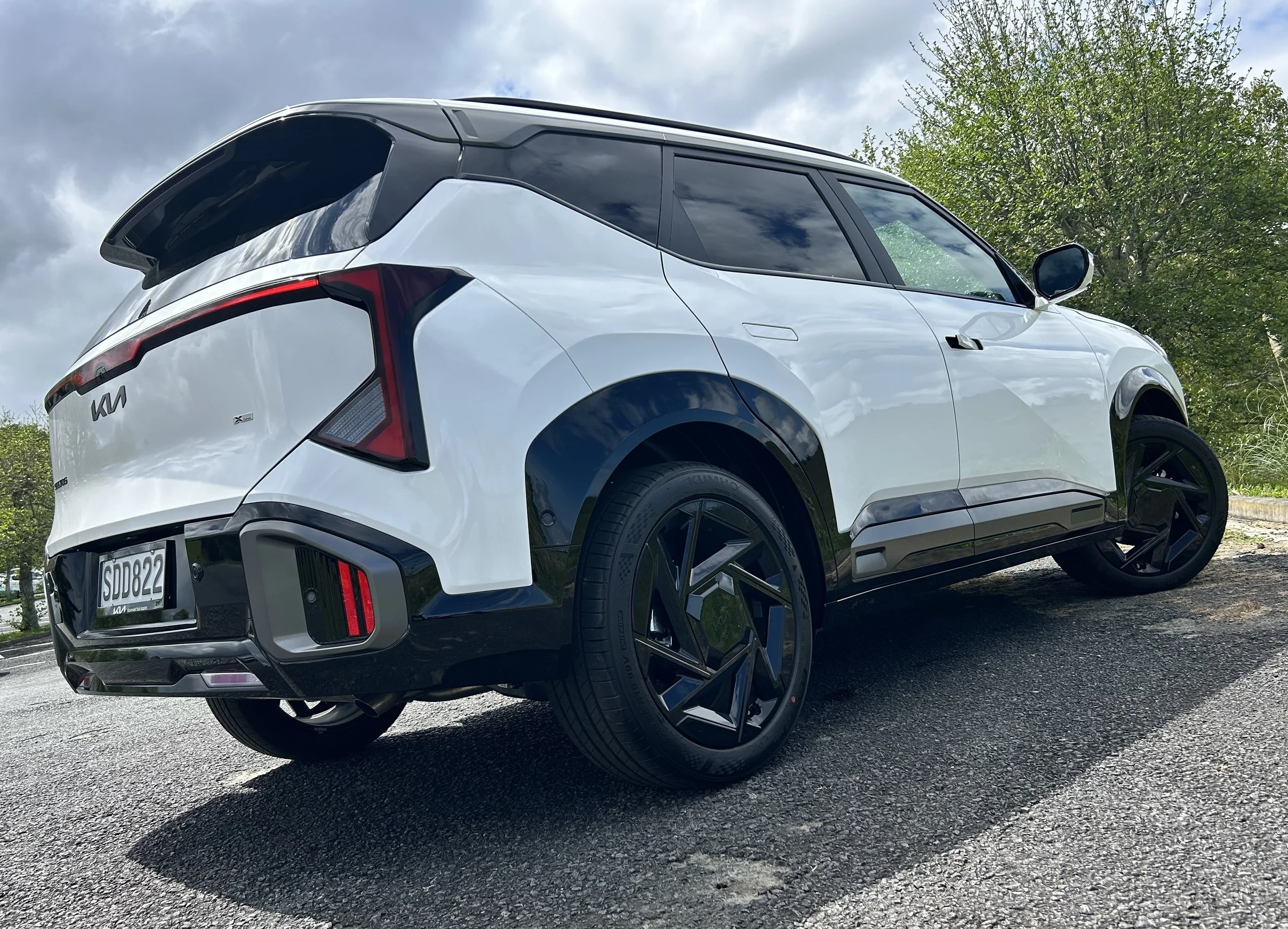
The X-Line models get their own design details, but in even base format this is a distinctive and smart-looking car that looks more expensive than it is, could easily be mistaken for one of the larger SUVs in Kia's lineup and is certainly easily-spotted in the traffic stream.
Lighting signatures of daytime running lights at the front that appears to shine through a nearly full-width grille and large rear lights that protrude from the bodywork are equal in expressiveness and announce presence at considerable distance. There's plenty more of interest in the design, too, including a rugged-looking anodised aluminium effect for the side sills, which is echoed in the front and rear bumpers. Flush-fitting door handles smooth off the side profile.
The K3 platform is also used by the Hyundai Kona and allows this Seltos to be significantly larger and thus roomier for occupants than its long-serving predecessor. The wheelbase is 60mm longer at 2690mm, at 4430mm it becomes 45mm longer, and is also 30mm wider, now at 1830mm. It also sits lower, with a height of 1600mm.
A spacious cabin and boot was a big selling point of the previous car that is even more obvious now. The tape measure will reveal the absolute truth, but gut feel is that it really isn't all that less capacious than the Sportage, with particularly generous headroom.
Hard and budget-themed plastics are in keeping with the spending profile, but also inhibit this cabin from having an affluent air, but Kia NZ’s contention it has deliberately moved away from poverty packs shows.
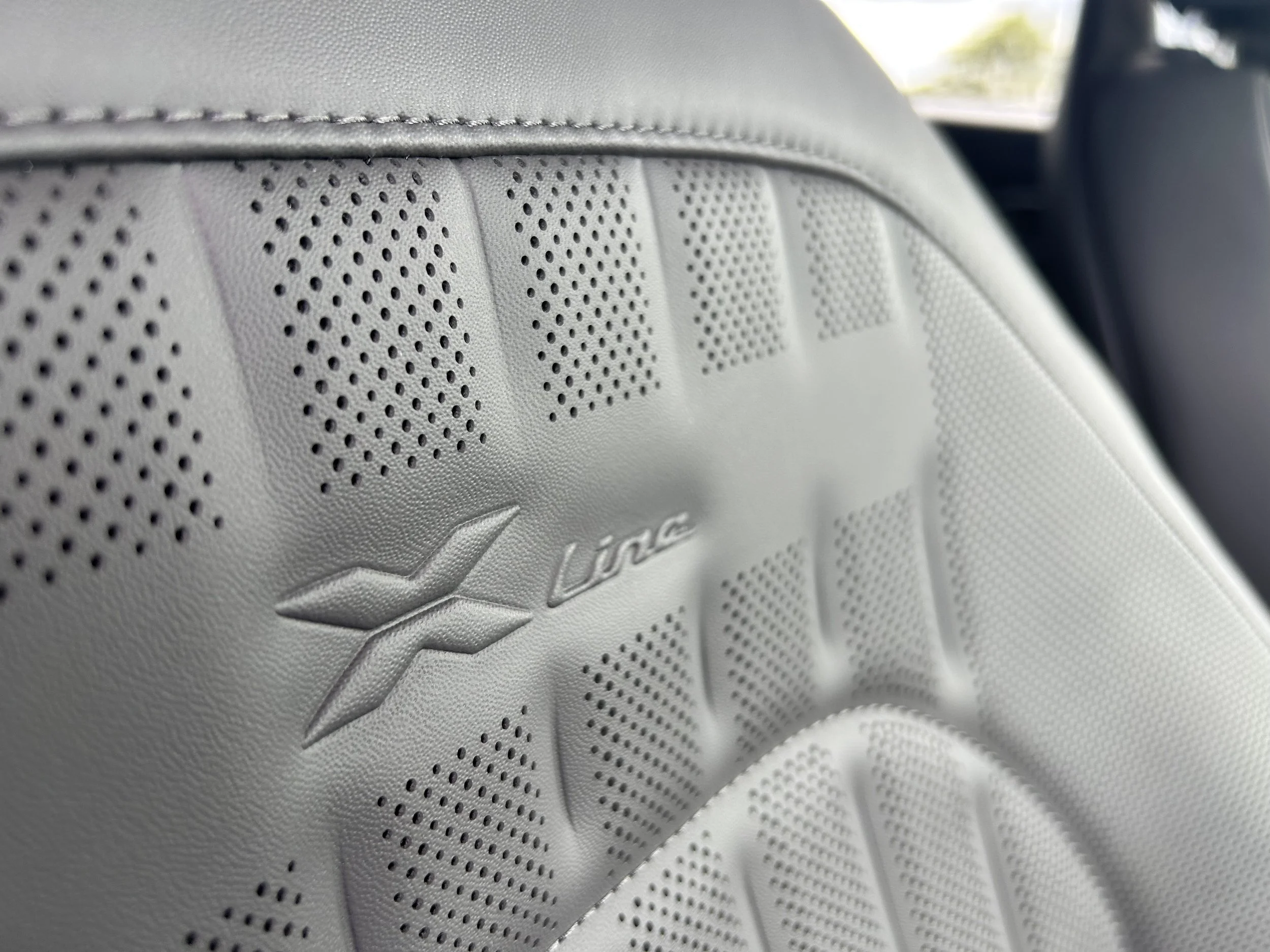
Even so, with LED lights, head-up display, comprehensive power/memory features for the seats, ambient interior lighting and Harman Kardon audio and the heaviest implementation of synthetic leather, the X-Line is tangibly the most stocked for comforts and convenience features.
All versions take dual-zone climate control; but just the big spend product will give you electric adjust for the front seats and the flagship is the only version with a power tailgate, a feature that includes height adjustability. While everything has a wireless phone charger, only here do you get it with a rubber mat to keep your device from slipping around.
A full suite of active and passive safety features can be found on all models, but X-Line is the sole edition with Kia’s advanced Highway Driving Assist technology package and the Light alone misses out on blind spot view monitor, which shows a camera feed from the side of the car on the dashboard when changing lanes) and reverse autonomous braking. There’s no ANCAP score yet.
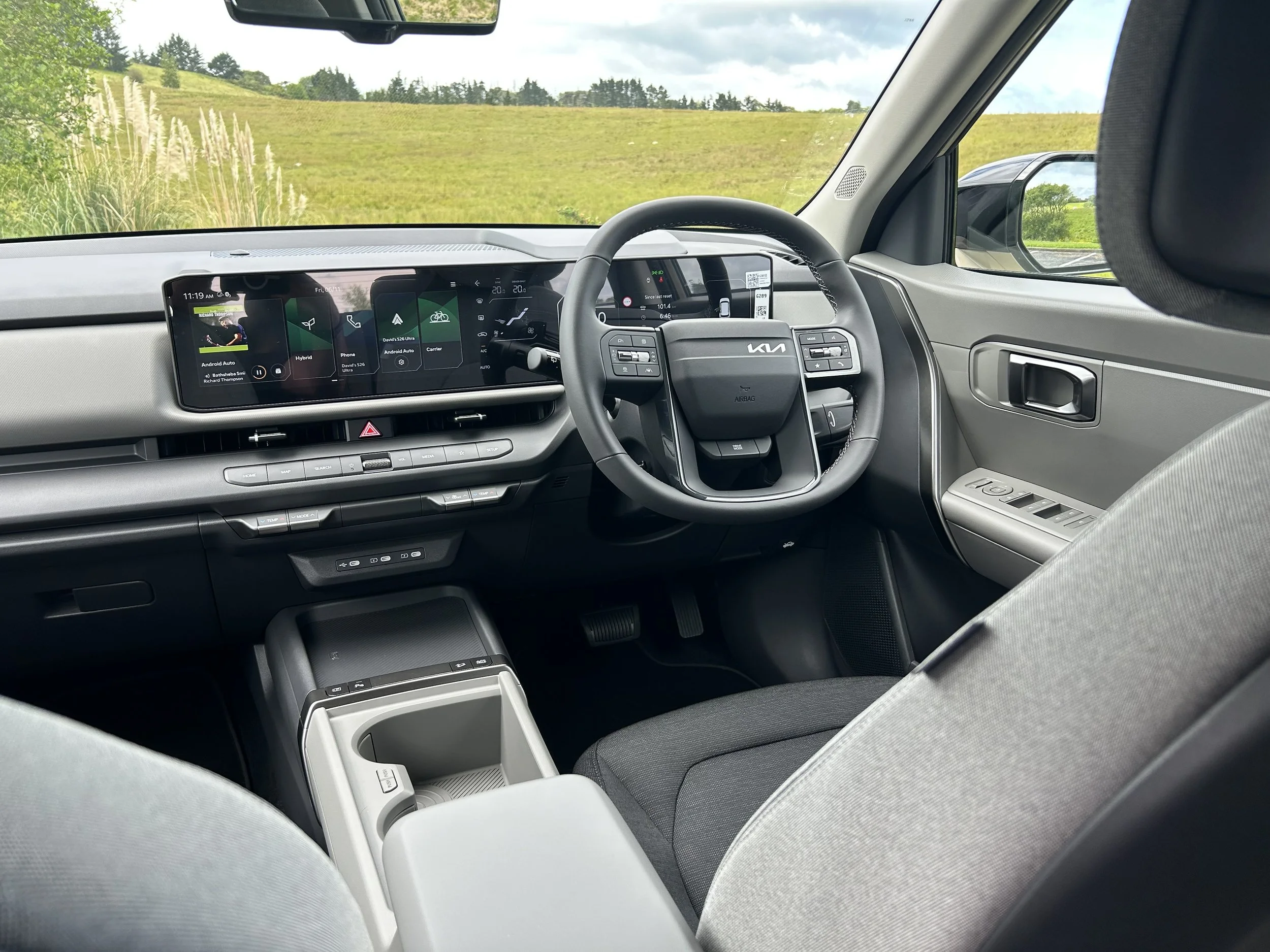
The two-screen dashboard setup speaks to an enhanced technology implementation, but it’s no fully committed. Kia sticking with supplementary physical switchgear for shortcuts in the infotainment and full control of the heating and ventilation is good news.
Nonetheless, as is the fashion there's a swathe of digital real estate spanning from the driver's side to well beyond the centre console, partitioning into a display for the instruments, a more modest panel dedicated to the climate controls and then a centrally positioned, larger touchscreen.
The latter’s functionality is optimised at X-Line level, but as smartphone mirroring in the forms of Apple CarPlay and Android Auto includes, what you don’t get in the car you can run via devices.
This car’s system also allows provision for over-the-air updates, with Kia provisioning six years’ complimentary connectivity, transferable should the car be sold before it wraps up. It also provisions with emergency services’ calling in event of a whoopsie, and the call centre you reach is in New Zealand (which isn’t always the case).
More than plenty of USB-C ports, even some integrated into the sides of the front seats, evidence to the Seltos standing to be regarded as a practical consideration. The door pockets are massive, there's a decent glovebox and more covered storage in a cubby under the central armrest, as well as the expected pair of cupholders and further storage on the centre console.
While categorising as a SUV, Seltos isn’t all that elevated so whole it offers a comfortable and upright driving position with a great view out in all directions, you don’t have to climb up into the cabin.
Lots of adjustment in the seat and steering wheel, along with a height-adjustable seatbelt, make it easy to get comfortable, regardless the driver’s seat could do with more shape. Speaking of: The design of those chairs have a shape that allows them to hold jackets and the like, just as a hanger would.
The floor in the rear of the Seltos isn't flat all the way across as it is in Kia's electric cars, but there is plenty of space for passengers; two adults or three children. It helps that the back seat is mounted high up, as that increases legroom, while there's also a large area under the front seats for feet. The backrest tilt being adjustable is a thoughtful touch.
At 536 litres, the boot of the Seltos has 38 litres’ more capacity than the previous kind and is only about 50 litres smaller than that in some versions of the Sportage.
The 60:40 rear seat has a through-load hatch and while the backs don’t fold down completely flat, they seem to latch down into place when dropped, which is a handy touch. A movable boot floor, some neat storage cubbies and some moveable plastic mountings which seem sturdy not just as hooks but also tie-down points are also commendable. It has a light towing rating, speaking more to small garden trailers than a boat or caravan.
Notwithstanding likely effort to push this car into the usual fleet avenues, Kia is finding most people who are buying for personal use gravitate to the X-Line specification.
That’s been the making of the latest Sportage SUV; 2500 registrations so far the year is a 231 percent climb, and most are in that trim.
It makes you wonder why, then, it bothers with two mid-spec Seltos choices. A Light makes sense, because it’s in a workable price band for fleet, but when there’s not a lot between an Earth and a Water in specific cation, and just $3000 separation in spend, why not just go with the better-kitted of those two?
The compact SUV sector is especially crowded. Kia NZ agrees Seltos has a lot of potential competitors, but suggests there are two hybrids in particular that could be considered barometers.
The Toyota Corolla Cross that sells from $44,990 to $55,990 is well-established and the sector leader for volume. Also cited is one yet to earn its spurs, the Outlander Sport, a Mitsubishi landing next month for $46,990 and $48,490.
It’s also thinking customers might cross-shop against the Honda HR-V ($43,500-$47,900), Hyundai Kona ($47,990-$59,990), plus two out of China, GWM Haval Jolion ($32,990 to $38,990 and MG ZS ($34,990 to $38,990).